Africa’s health advocate steps back after decades of activism
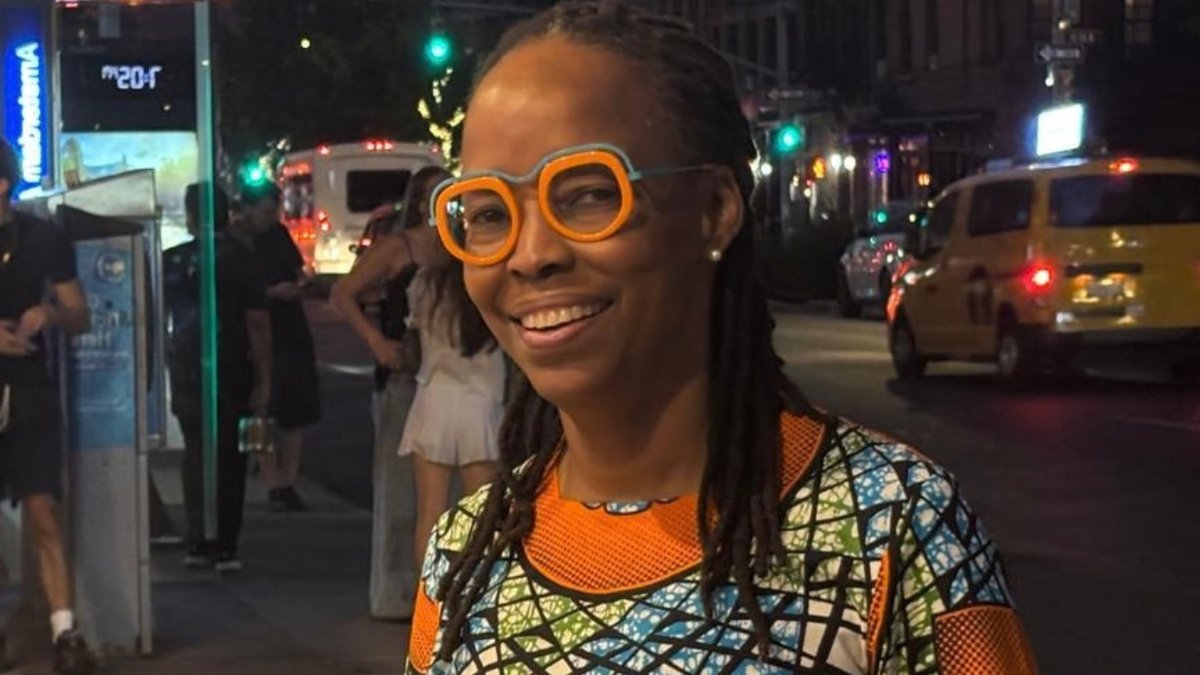
A breast cancer diagnosis in 2004 turned Kwanele Asante into one of Africa’s most vocal advocates for people with noncommunicable diseases (NCDs) and mental health struggles. For two decades, she pushed health systems to engage with the communities their policies claimed to serve, reaching a peak with her 2023 address to the UN General Assembly on lived experience in global health. Early in 2024, however, a cascade of new health crises forced her to step away from activism.
Her early years unfolded in a Soweto TB sanatorium in 1969, where her parents met. By age seven, she had already attended six schools, including one where teachers segregated students into “smart ones” and “donkeys.” A single teacher, Dineo Mpofu, saw her potential and spent years mentoring her during breaks. “She told me, ‘You are actually smart,’” Asante recalled.
Her education was repeatedly disrupted by apartheid-era policies. In the early 1980s, her mother became a prison officer in Bophuthatswana, relocating the family to housing on the “Black side” of a maximum-security prison. Asante later described the stark divide: white officers lived in spacious quarters while Black families were crammed into tiny homes. Prisoners would drop to their knees.”
By 1989, Asante earned a full scholarship to Wesleyan University in the U.S., where she studied sociology and psychology. As the only Black African woman on campus, she faced unique challenges. She later completed a law degree at Wits University, though she never practiced law. Instead, she shifted into bioethics and health law.
Her activism crystallized after her breast cancer diagnosis at 37. While recovering, she noticed a sharp disparity: in a private oncology clinic, she saw only two Black women in the waiting room over months. At public hospitals like Chris Hani Baragwanath, patients sat half-dressed with untreated breast conditions. “There were no gowns,” she said. “It was chaotic.” When she confronted surgeons about dignity concerns, they dismissed her. Within weeks, gowns appeared—and Asante founded BreastSens, an NGO to improve care for indigent Black women.
Read Also: New HIV jab sparks demand in South African clinics
Global health’s broken promises to Africa
Her work expanded beyond breast cancer. By 2016, she had earned a master’s in bioethics and health law, then joined the WHO’s civil society working group on NCDs. Her critiques sharpened over time. In 2025, she co-authored a BMJ article arguing that global health NGOs often speak for communities they barely understand, remaining headquartered in Europe or North America while claiming to represent African patients.
The turning point arrived in February 2024. While researching online, Asante discovered an error: a Google AI tool referred to her as “the late Kwanele Asante.” Weeks later, she developed severe abdominal pain and was admitted for an emergency appendectomy. After 19 days in hospital, she learned it coincided with her 20-year breast cancer anniversary. “In April?” she said, shaking her head.
Her health had worsened significantly. She now lives with chemotherapy-induced heart failure, bipolar disorder, anxiety, and a functional neurological disorder—conditions she rejects as irrelevant to the “survivor” label.
Name change reveals deeper systemic failures
In 2012, she legally changed her name to Kwanele Asante-Shongwe, combining isiZulu for “it is sufficient” and Kiswahili for “thank you.” The choice reflected her frustration with systems that failed patients like the three single mothers she knew who died from undiagnosed heart damage after cancer treatment, all at 35, while she, at 44, received a life-saving defibrillator covered by her medical aid.
The disconnect she described had been building for years. By 2023, she had spent years criticizing the gap between global health institutions and the communities they claimed to serve. Her frustration peaked during a WHO meeting in Geneva, where Western academics and NGO representatives repeatedly positioned themselves as spokespeople for African patients, despite rarely engaging with those communities.
Related Stories
 Mental Health Dispatch
COVID hospitalization raises stroke risk in seniors
 Mental Health Dispatch
Study links hand inflammation to higher risk of death
 Mental Health Dispatch
Health research agency seeks more independence
 Mental Health Dispatch