Healthcare leaders stress human focus over tech in innovation
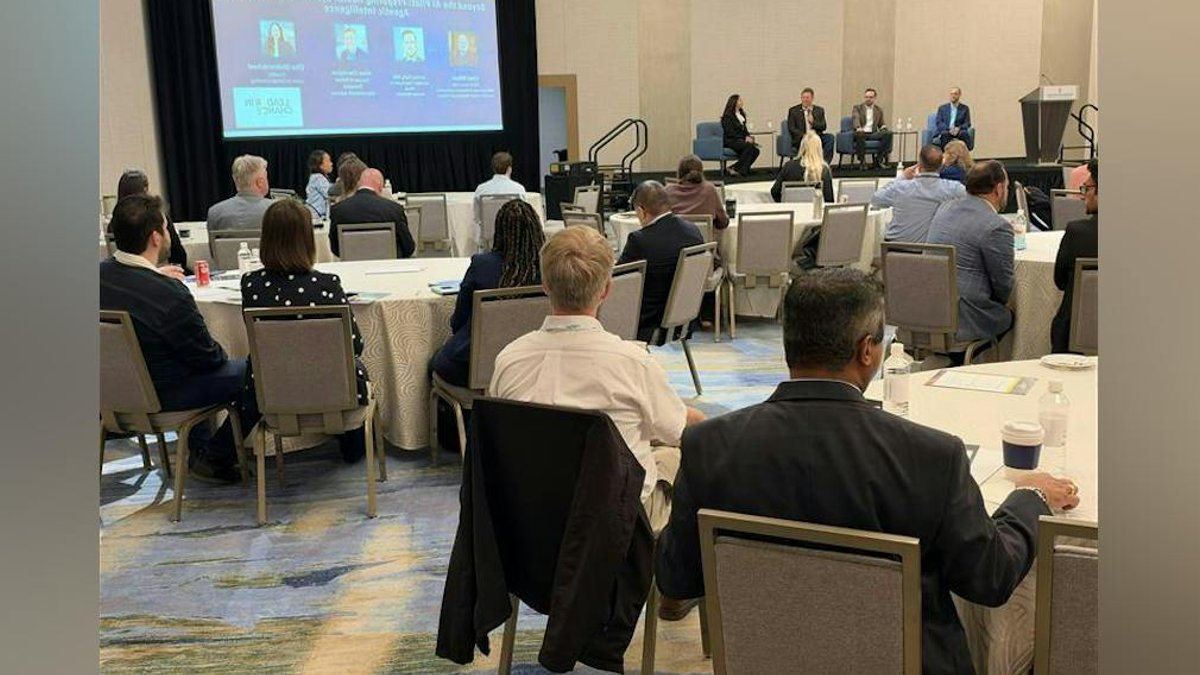
Healthcare leaders convened in Houston this month to address a core challenge: technology alone cannot resolve the complexities of modern patient care. At the Healthcare Innovation Summit, representatives from leading health systems argued that effective innovation requires aligning technological solutions with the practical demands of clinicians and patients, rather than imposing tools without regard for their impact.
MD Anderson Cancer Center’s Pavitra Krishnamani, M.D., opened the event by highlighting a common pitfall: organizations frequently deploy new technologies without first establishing what specific problem they aim to address. Her research in artificial intelligence and digital health demonstrates that successful implementation depends on cross-disciplinary collaboration among clinicians, data analysts, and frontline staff. Krishnamani encouraged leaders to ask a more fundamental question: “Rarely do we ask what should be.” It is an important distinction.
Houston Methodist provided a case study in unintended consequences. The system piloted ambient listening technology to ease nursing documentation burdens, only to find it introduced new workflow inefficiencies. Rather than assuming the initial design was flawless, leaders revised the tool based on frontline feedback. This experience reinforced that adoption must include iterative adjustments, not just initial testing.
Human-Centered Design Reshapes Virtual Care
Discussions on virtual care and population health emphasized human-centered design. Houston Methodist has broadened its virtual services beyond intensive care monitoring to include telepsychiatry, telephonic urgent care, and virtual hospitalist consultations. These initiatives do more than replicate in-person visits—they reallocate workloads, allowing bedside nurses to dedicate additional time to direct patient interactions. Meanwhile, Memorial Hermann’s approach integrates social determinants of health into care coordination, using technology to identify at-risk patients while relying on human assessment to address barriers like transportation or childcare needs.
Agentic AI, systems capable of autonomous action toward defined objectives, represented a high-priority focus. Unlike generative AI, which responds to user prompts, these tools can perform tasks such as rescheduling appointments or retrieving flight medicine protocols for NASA. Houston Methodist’s voice agent, Zoe, handles routine call-center functions but escalates complex inquiries to human operators. Panelists stressed that autonomy levels must correspond to risk tolerance: errors in appointment scheduling pose less danger than misinterpretations of patient needs.
AI Risks Demand Cybersecurity Overhauls
Cybersecurity concerns quickly became a central topic. Richard Staynings, a specialist in digital security, cautioned that AI-driven workflows must be treated with the same safeguards as protected health information systems. Organizations require strict access controls, incident response protocols, and staff training to detect system failures. A past EHR outage at his former workplace illustrated the stakes: clinicians could not revert to paper records after just seven minutes without digital access. As AI integration deepens, resilience must be embedded from the outset, not added later.
The Summit repeatedly showed that technology’s effectiveness hinges on how it is introduced. Whether through AI, virtual platforms, or workflow redesigns, the priority must remain the people delivering and receiving care.
Scaling Innovation Without Sacrificing Safety
The next obstacle, as highlighted at the Summit, is scaling these lessons beyond pilot programs. Houston Methodist’s revisions to ambient listening technology show how frontline input can refine innovations. However, widespread adoption depends on health systems treating implementation as an ongoing process, not a single decision. The critical question remains whether organizations can reconcile the need for speed with the necessity of careful oversight, or if the push for innovation will outstrip their ability to manage associated risks.
AI adoption in healthcare must account for both its potential and its limitations, according to Summit discussions. Yet panelists warned that autonomy levels must align with acceptable risk thresholds. A system rescheduling a follow-up visit poses minimal danger, whereas one misinterpreting patient symptoms carries significant consequences. Clear boundaries must be defined: which functions can operate independently, which require human escalation, and which should remain entirely manual.


