Mother’s 30-Year Care for Son with Cerebral Palsy
In rural North West province, South Africa, Keneilwe Dikoma was just 16 when her baby, Lorato, failed to meet developmental milestones during his six-month check-up in 1995. The clinic sister noted he should have been sitting by then and sent them to Gelukspan District Hospital, where Lorato was diagnosed with cerebral palsy (CP), a group of permanent conditions affecting movement, posture, and muscle control caused by brain damage before, during, or shortly after birth.
Lorato was born silent, and days later began having seizures. Healthcare workers who saw Lorato in his early days suspect that the latter is what happened, but his medical records don’t exist. Dikoma was so young, and it all happened so many years ago in a rural clinic where apartheid and Bophuthatswana still lingered, so she doesn’t know where things may have gone wrong. Birth asphyxia rates can be reduced — South Africa’s own health department says so, and has said as much since 2011. Its recommendations are basic: staff should be trained to revive newborns (get them breathing in the case of low oxygen) and handle emergencies during l
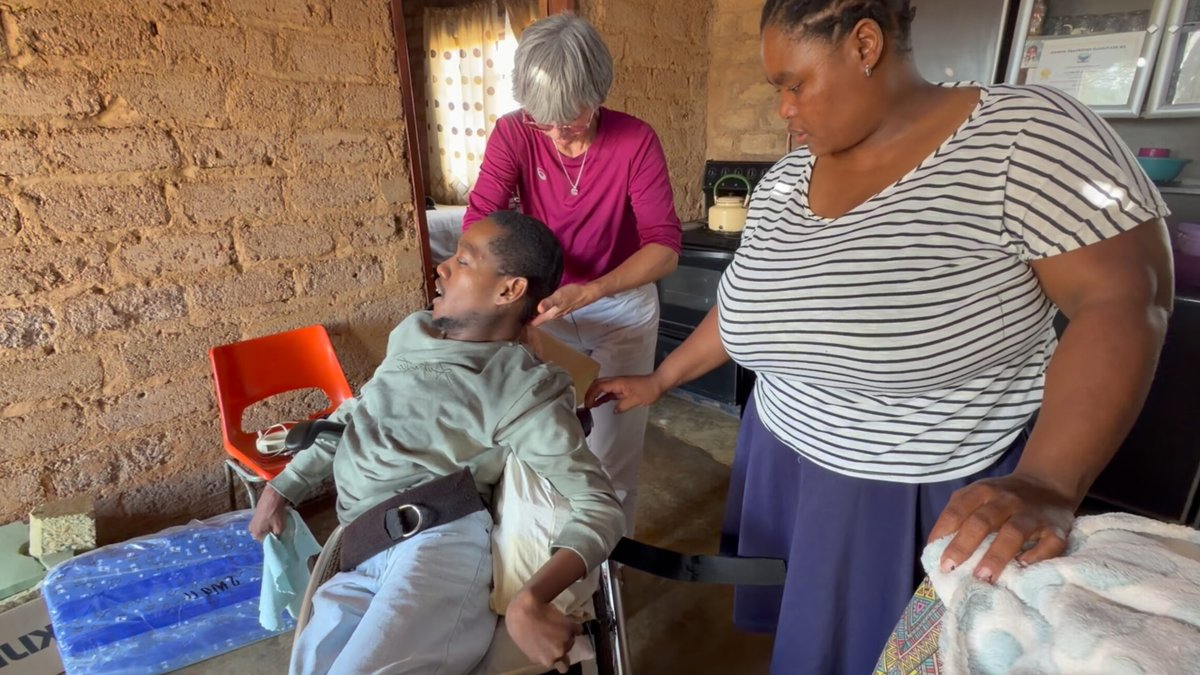
Lorato has spastic quadriplegic CP, which affects all four limbs. He uses a wheelchair and depends entirely on others for daily care. His body’s constant tightness has caused severe scoliosis, and he experiences involuntary jerking movements. Communication is limited to sounds and eye movements, a “secret language” understood only by those close to him. Despite this, he is beloved in the village, attending gatherings and finding joy in gospel music played loudly on the TV.
Church Support Keeps Child Connected
The church community has been central to Lorato’s well-being. When he misses a Sunday service, he becomes withdrawn and refuses food. Dikoma credits the congregation with accepting and celebrating him, making him feel included. “They accepted him, made parties for him, everything,” she says.
After the initial diagnosis, Dikoma stayed at the hospital’s Parent Guidance Centre (PGC) for six weeks, learning to care for Lorato at home. The PGC aimed to teach families exercises, positioning, and feeding techniques so institutional care became a last resort. “I really struggled to accept it in the beginning,” she says.
Program Funding Collapses, Equipment Fails
The PGC’s approach aligned with research showing home-based strength training and exercises are most effective for managing CP. However, funding for the program dwindled over time. By 2016, courses stopped altogether, leaving only brief Tuesday sessions for support. Equipment shortages have also emerged; Lorato’s wheelchair no longer fits properly, causing pain and limiting his mobility.
Poverty compounds these challenges. The nearest clinic is mobile and often out of Lorato’s medication. Dikoma spends a significant portion of his disability grant on transport to Gelukspan. Their three-room home lacks indoor plumbing, forcing Dikoma to use a nappy for Lorato’s bathroom needs. “This is how we do it. There is no appropriate toilet for him,” she says matter-of-factly.
Despite inadequate resources, Dikoma has sustained Lorato’s care for 30 years. Her immediate needs remain clear: functional transport for medical appointments, consistent therapy visits, a properly fitting wheelchair, and a home with accessible facilities. “Cars for the therapists to travel to the rural areas twice a month,” she says, listing priorities. These basics, she argues, would transform lives for caregivers like her.
Rural Families Face Medication Gaps
The nearest clinic to the Dikoma household operates as a mobile service, sometimes lacking essential medications for CP management. When prescriptions aren’t available locally, Dikoma must travel to Gelukspan, incurring costs that consume a large portion of Lorato’s monthly disability grant. These financial and logistical barriers create additional obstacles to consistent medical care for families managing rural healthcare systems.


